ESSAY
Lebanon - Why it is the way it is.
Over recent days you may have heard calls from the US / Israel for Lebanon to simply remove Hezbollah and all shall be well. Spoiler - it’s not.
16 March 2026 · 8 min · Kate
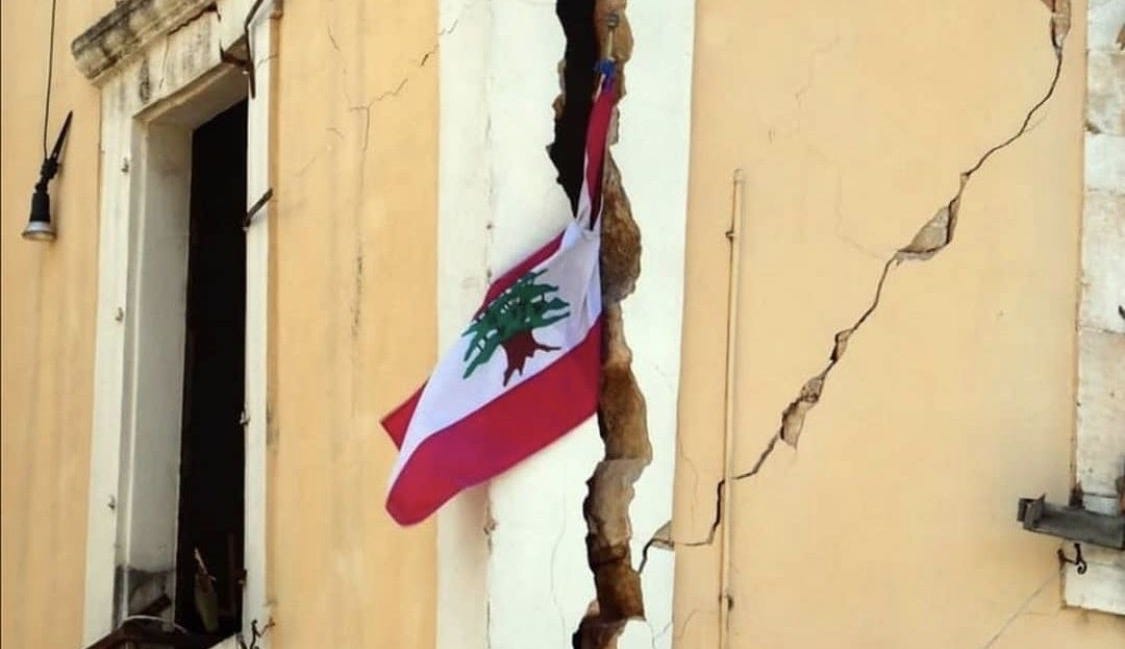
Over recent days you may have heard calls from the US / Israel for Lebanon to simply remove Hezbollah and all shall be well. But is it really that simple?
Spoiler: It’s not
I. The Historical Foundation: A Country Built on a Faulty Premise
The origin story is essential and almost never told correctly in Western media.
Modern Lebanon didn’t emerge organically, instead it was drawn into existence on 1 September 1920 by French General Henri Gouraud, who stitched together the old Maronite heartland of Mount Lebanon with the Bekaa Valley, the Shia-majority south, the Sunni coastal cities of Tripoli and Sidon, and Beirut.
Instead of risking a return to famine through the isolation of a small Lebanon, or else risking political incorporation into Muslim-Arab Syria, Maronites and French officials hoped that a French-sponsored Greater Lebanon would overcome the crisis.

The fatal flaw was demographic.
Although the Maronites were the largest single element, they no longer formed a majority. The population was more or less equally divided between Christians and Muslims, and a large section of it wanted neither to be ruled by France nor to be part of an independent Lebanon, but rather to form part of a larger Syria. 
Critically, the Shia of the south were generally poor and politically sidelined from the power structure  from the moment the state was created.
… This is the seed of everything that follows…
The whole confessional architecture was then anchored to a single census — the 1932 count conducted under French supervision — which found a slight Christian majority.
As a result, Christians and Muslims were represented in parliament according to a 6:5 population ratio, a ratio determined according to that 1932 census under the French mandate.  That census would never be updated.
Lebanese demography shifted dramatically over the following decades, the Shia grew faster than any other community, but the political formula stayed frozen because, ultimately, updating it would have reshuffled power too dramatically for Christians to accept.
II. Confessionalism: The Architecture of Controlled Instability
The confessional nature of the Lebanese political system is translated into three main aspects:
(1) The president must be a Maronite Christian,
(2) The prime minister a Sunni Muslim, and
(3) the speaker of parliament, a Shiite Muslim. 
Because of its confessional quota and power-sharing system, Lebanon’s democracy is based on consensus rather than majoritarian rule. Consequentially, the system affords political representation to the groups and provides them a degree of autonomy in the regulation of matters relating to personal status, education, marriage and other cultural or social affairs. 
The logic behind it is sophisticated: in a country with no dominant majority, you create a government of mutual vetoes so no single group can dominate.
The consensus that said formula was supposed to ensure, expressed in an old Lebanese slogan of “no victor, no vanquished” (لا غالب ولا مغلوب), has increasingly eroded as sectarian groups failed to make necessary compromises. 
Now, here is the system’s Achilles heel — because every ministry and public sector job is parcelled out by sect, the prevalence of state corruption has generated political patronage networks by weakening state institutions and cultivating dependency on patronage for resources and welfare. 
For example, former warlords who signed the Ta’if Agreement didn’t disarm, rather they put on suits. In practice it has enshrined the control of former warlords who now share between them senior public sector positions on the basis of religious affiliation.

The result is a system that was once regarded as the best possible solution for a divided country, but the wisdom of this choice is now contested. 
III. The Civil War: How the Fractures Became Ruptures
The 1975–1990 civil war is the event horizon that explains modern Lebanon.
It emanated from the deterioration of the Lebanese state and the coalescence of militias that provided security where the state could not. These militias formed largely along communal lines. 
Multiple fault lines converged simultaneously. The 1943 power-sharing formula, already straining, was pushed to breaking point by the arrival of the PLO after their expulsion from Jordan in 1970. Then the Palestinians from Jordan added to the Palestinian refugee population already in Lebanon, swelling their numbers to approximately 400,000. 
Different communities saw the Palestinian presence differently: the Shia held mixed opinions on hosting the PLO, while the Christians objected to the PLO incurring Israel’s wrath, also fearing the PLO’s ability to augment the strength of the Sunni militias. 
Then the war’s progression brought profound changes to Lebanon’s Shia community, which is traditionally the most marginalised major sect. 
Two Israeli invasions, in 1978 and 1982, drove hundreds of thousands of Shia refugees northward, swelling the ranks of resistance movements. The 1982 invasion, aimed at expelling the PLO, had a profound unintended consequence: it galvanised Lebanese Shia, who had suffered under both Israeli occupation and PLO armed presence on their land, into organised armed resistance.
The Sabra and Shatila massacre perpetrated by Israeli proxies against Lebanese Shias had as a long-term consequence the emergence of a homegrown Lebanese, rather than Palestinian, resistance movement within South Lebanon. 
The war ended not with a winner but with an externally brokered exhaustion.
The Taif Agreement, brokered in Saudi Arabia in 1989, restructured the political system, giving Muslims greater representation while maintaining the sectarian power-sharing formula. It also called for the disarmament of militias, though Hezbollah was allowed to retain its weapons under the guise of resistance against Israeli occupation.
That carve-out — Hezbollah as a “resistance” rather than a militia — would define the next four decades.
IV. Hezbollah: A Parallel State.
This is the crux of the “just kick them out” fallacy, and the research is damning on this point.
Hezbollah is a Shiite Muslim political party and militant group based in Lebanon, where its extensive security apparatus, political organization, and social services network have fostered its reputation as “a state within a state.” 
The social infrastructure angle is particularly critical and underreported: through institutions such as Jihad al-Bina, the Islamic Health Authority and the Imam al-Mahdi Scouts, Hezbollah has delivered infrastructure, education and healthcare, while also offering quasi-military training and embedding youth in its cultural and ideological framework. 
Hezbollah currently operates at least:
four hospitals,
twelve clinics,
twelve schools and
two agricultural centres that provide farmers with technical assistance and training. 
Its financial arm — Al-Qard al-Hassan — functions as a parallel banking system: by 2019, its loans exceeded $3.5 billion, benefitting over 1.8 million citizens.  When Lebanon’s formal banking system collapsed after 2019, this network became a lifeline for entire communities.
The key to understanding why “just disarm them” is naive is that: Hezbollah’s health and social services capacity is far larger than that of the Lebanese state itself. 
For Shia communities in the south, Dahieh, and the Bekaa — communities historically neglected by the state — Hezbollah is not an external imposition. It is the state.
Hezbollah’s power cannot be understood solely through its military or political roles. It is simultaneously a political party, an armed movement, a welfare provider, and a regional actor embedded within the strategic architecture of the Middle East. 
Crucially, Hezbollah’s political legitimacy is real, if contested: Hezbollah has been a fixture of the Lebanese government since 1992, when eight of its members were elected to Parliament, and the party has held cabinet positions since 2005. 
This doesn’t mean that everyone likes them.
A 2024 Arab Barometer survey found that 55% of Lebanese have “no trust at all” in Hezbollah, although it remains popular among the Shia population.  That internal tension — broadly unpopular nationally, deeply embedded in its base — is the paradox the West consistently fails to engage with.
V. The Regional Proxy Dimension: Lebanon as a Chessboard
Lebanon has never been allowed to simply be Lebanon. Every major power in the region has used it as a theatre.
Iran and Saudi Arabia are engaged in a proxy war over influence in the Middle East, providing varying degrees of support to opposing sides in conflicts including Lebanon. 
The architecture falls as follows:
Iran funds and arms Hezbollah (Shia); just as Saudi Arabia funded the Sunni Future Movement under the Hariri family. These were not just political parties — they were pipelines of patronage, each keeping their community dependent and loyal. Iran’s strategy in Lebanon is long-running and deliberate. Iran’s first proxy war was its intervention in the Lebanese Civil War in 1982. By leveraging its ideological and clerical ties with Lebanese Shia, Iran split Hezbollah from the Amal movement.  The objective evolved from exporting the Islamic Revolution into creating a deterrence posture against Israel and increasing its regional influence in the Eastern Mediterranean. 
Syria’s role is equally important and often overlooked: Syria’s dominant role in Lebanese affairs during the period from 1976 to 2005 — during which Damascus manipulated Lebanon’s confessional politics in service of its foreign policy — was at least partly the result of this state of affairs.  Syria effectively ran Lebanon as a client state for three decades. When it withdrew after the 2005 Cedar Revolution following Rafik Hariri’s assassination, the vacuum was partly filled by an emboldened Hezbollah.
The Israel dimension runs underneath all of this: Israel has invaded Lebanon twice (1978, 1982), occupied the south for 18 years, and fought a 34-day war with Hezbollah in 2006. Each military engagement reinforced Hezbollah’s legitimacy as a resistance movement among Lebanese Shia, generating recruits and popular support that purely political or economic arguments could never produce.
So what now -
The argument that Western commentators miss is this: Hezbollah is not a foreign body that Lebanon could excise. It grew in the soil of Lebanese state failure, built from historical Shia marginalisation, French colonial misdesign, civil war trauma, Israeli occupation, and economic collapse.
It then made itself indispensable through schools, hospitals, loans, and reconstruction.
Asking Lebanon to “remove Hezbollah” is like asking a body to remove its own cancerous immune system. The state would have to replace everything Hezbollah does before it could credibly demand Hezbollah’s disarmament, and Lebanon’s state has been too broken, too corrupt, and too financially destroyed to do that.