MUSING
From “Horrid” to Hero: The Gaslighting of a Generation
How We Were Duped into Believing Our Childhood Villain Was Evil - And What It Reveals About Us
15 April 2025 · 5 min · Kate
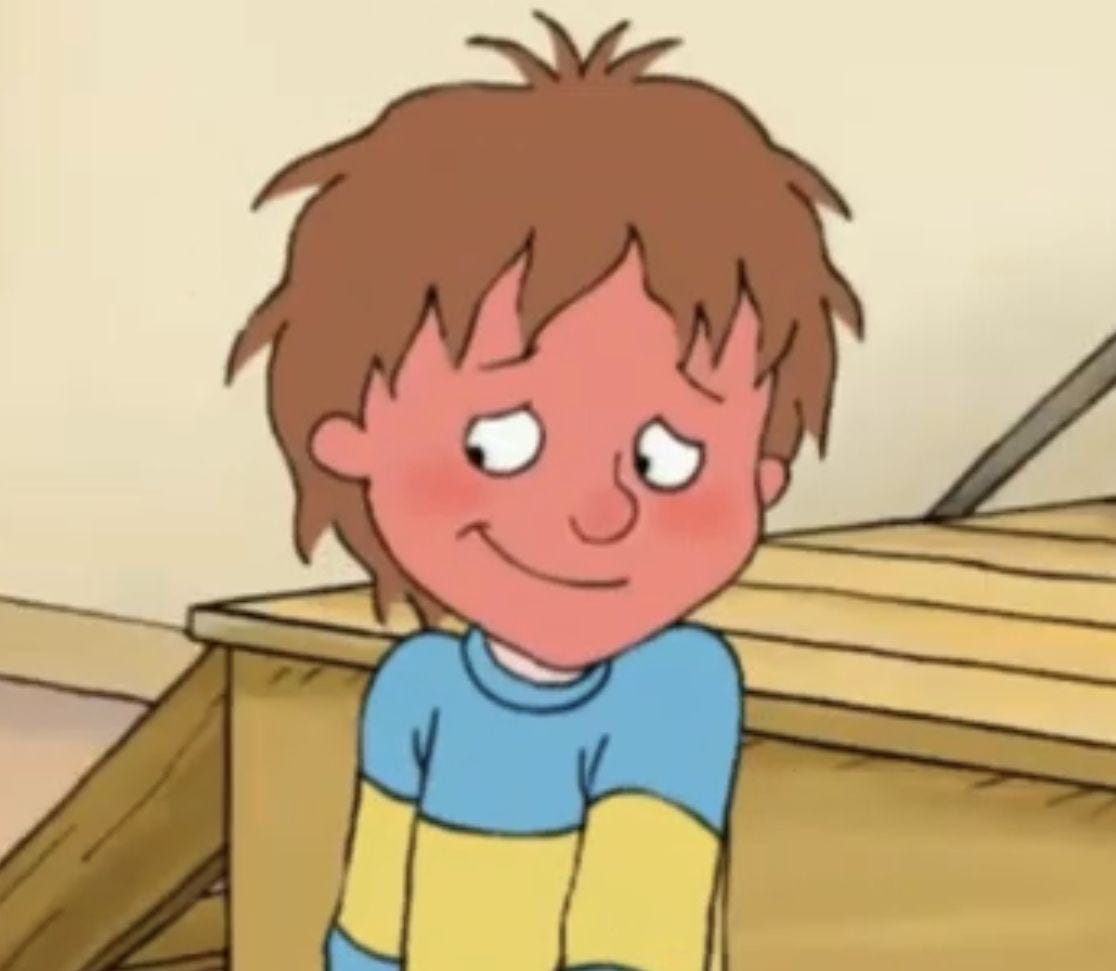
How We Were Duped into Believing Our Childhood Villain Was Evil - And What It Reveals About Us
By Kate Millar
Remember Horrid Henry?
That lippy little menace with the spiked hair and a vendetta against authority?
If you grew up in the UK sometime between the fall of Woolworths and the rise of TikTok, chances are Henry was a core part of your media diet - an unruly, unrepentant antihero whose antics left us in stitches and his parents on the brink.
…
But here’s the twist: what if he wasn’t horrid at all?
What if the real horror wasn’t Henry’s behaviour, but the environment that labelled him that way in the first place?
Buckle in, because this is a story about mischief, emotional neglect, systemic oppression, and the deeply British art of calling children “naughty” when they’re actually traumatised.
The Cyclical Curse of the “Horrid” Label
There’s an academic paper (yes, someone actually studied this) called “Violence and Fear in Francesca Simon’s Series of Horrid Henry”.
It clocked 185 instances of violence in the books.
Of those, 38 were physical (kicking, punching, the occasional well-placed bogey) and 147 were emotional. You read that right: one hundred and forty-seven times Henry is emotionally manipulated, humiliated, or dismissed.
That’s not cheeky; that’s systemic.
And who’s dishing it out?
His parents.
His teachers.
Occasionally Peter, weaponising his cherubic innocence like a small, smug Swiss Army knife (pictured below).
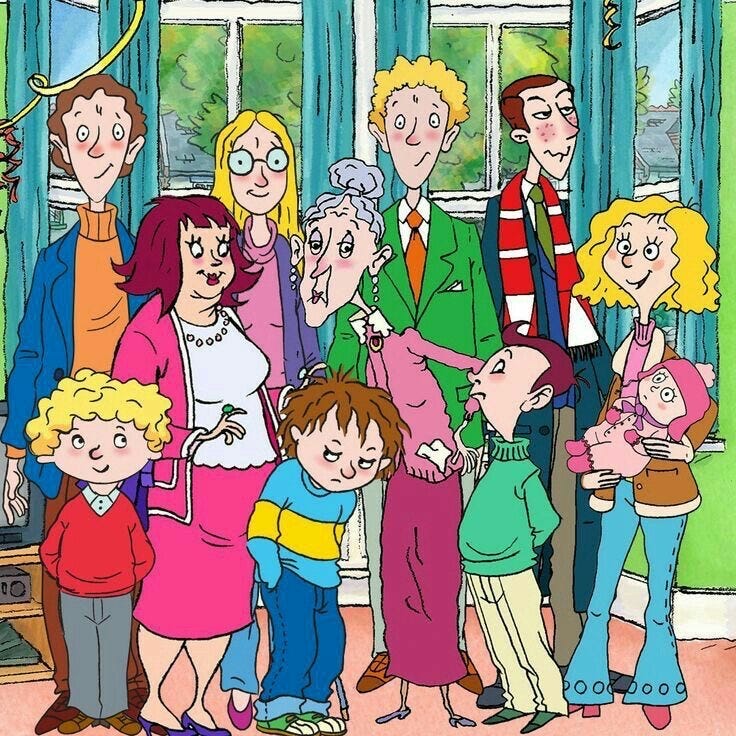
Henry’s so-called horridness is less a behavioural quirk and more a psychological inevitability. He’s been labelled, boxed, and punished into performing the very role they assigned him.
You don’t need a PhD in psychology to know this is classic labelling theory. Tell a kid he’s awful long enough, and he’ll live up to it.
Had he been christened “Heroic Henry” or “Headstrong Henry” or “Henry Who Just Needs a Bit of Emotional Support, Honestly,” we might be telling a very different story.
Perfect Peter and the Perils of Golden Child Syndrome
Enter: Perfect Peter. The human equivalent of a laminated star chart.
He’s tidy, polite, sugar-sweet, and dull as dishwater. But here’s the kicker - he’s not perfect because he’s good, he’s perfect because he follows the rules.
Because he makes life easier for the adults around him. Because he fits.
Peter isn’t rewarded for being better. He’s rewarded for being easier to manage.
And so the cycle continues: Henry acts out, Peter behaves, the parents over-praise one and over-punish the other, and we, as kids, watch and learn that being “good” isn’t about fairness or feeling… it’s about compliance.
Sound familiar? :)
Beyond the Bedroom → Horrid Henry Explains the Whole Bloody System
Let’s not pretend Henry’s kitchen-table tyranny is confined to children’s fiction. His family is a stand-in for society itself: a tightly wound little power structure where compliance is rewarded, rebellion punished, and the middle-class sofa cushions are never to be disturbed.
Scenario 1: The Office as Henry’s Kitchen Table
Think about your job. You show up with ideas - big ones, messy ones, good ones.. and within days you’re told to “just stick to the template.”
Meanwhile, someone called Jonathan (read: Perfect Peter in chinos) gets promoted for colour-coding an Excel sheet. You start to feel a bit horrid yourself. You’re disruptive. Difficult. “Not quite team material.”
You’re Henry in a swivel chair. Brilliant, ignored, and half a prank away from an HR meeting.
Scenario 2, Politics: The Peter Principle in Action
Politics is just Perfect Peter cosplay. It rewards those who follow the rules, wear the tie, and never, ever deviate from the approved talking points.
The Peters rise. The Henrys are ousted for “lack of decorum.”
Or for throwing metaphorical water balloons in the chamber.
The rules of Henry’s household: ‘favour the polished, punish the passionate’ .. scale frighteningly well to national governance.
Scenario 3, Social Media: A Playground of Labels
And then there’s Twitter, TikTok, Insta - pick your poison.
One wrong word, one misjudged opinion, and you’re Henry with a trending hashtag. “Problematic,” “toxic,” “too much” are all new-age synonyms for “horrid.”
Everyone wants a Perfect Peter: agreeable, brand-safe, algorithmically appealing.
Henry doesn’t trend. He gets shadowbanned.
What began as a playground insult in a children’s book is now a cultural script where the loud, emotional, boundary-pushing ones are framed as threats, not thinkers.
Henry Wasn’t the Problem. The System Was.
Let’s stop and say it: Horrid Henry was never the villain.
He was the canary in the middle-class coal mine.
A kid screaming into the void of institutional unfairness with nothing but a frog and a slingshot.
He was a product of systemic emotional neglect dressed up as discipline.
And the wildest part? We laughed.
We giggled our way through a masterclass in gaslighting.
We were trained to see rebellion as misbehaviour and compliance as virtue.
It was funny, until we grew up and realised we’d internalised all of it.
A Message to the Once-Horrid Henry Generation
You weren’t just watching cartoons. You were being trained in the unspoken rules of the world: fit in, behave, be like Peter, or be labelled horrid. And if you didn’t fall in line? ..
Well, hope you like being misunderstood, under-promoted, and permanently “a bit much.”
It’s time we looked back, not just with nostalgia, but with clarity.
We weren’t horrid.
We were loud. Curious. Messy. Alive.
And somewhere along the way, we were taught to mute all of that.
Reclaiming the Narrative
In re-reading Horrid Henry, we don’t just find a cheeky child. We find a blueprint for how society builds its golden children and banishes its rebels. Henry was the first label we swallowed without question. The first outsider we agreed to laugh at. But in doing so, we missed the point: he wasn’t the problem. The frame was.
So maybe it’s time we all became a little more Horrid. Or, at the very least, a little less Perfect Peter.
Because if there’s one thing this generation deserves, it’s to rewrite the stories we were told, and maybe this time, put the right kid on the cover.
Dear reader,
this might be my most unhinged article to date. If you’re unfamiliar with Horrid Henry, I’m not sure how you got this far, but here are some sources I rabbit holed which inspired this article:
https://files.eric.ed.gov/fulltext/EJ1202537.pdf
https://www.reddit.com/r/FanTheories/s/bWeXirM86j
https://earl-april.tumblr.com/post/620934090318872576/the-truth-about-horrid-henry
https://villains.fandom.com/wiki/Henry_and_Peter%27s_Parents
https://youtu.be/U-JMa3O1-XQ?si=FGDOfCU0Yj1Qf-uR - particularly good video doc
https://youtu.be/kJze-Z_00B4?si=9vhDkWCyeovAL8xe
And a concerning amount of TikTok
Affectionately,
Kate