OP ED
Boring Reforms Are the Most Dangerous - Start Paying Attention.
The most important shift in British justice in decades is happening in plain sight, disguised as admin.
5 December 2025 · 5 min · Kate


The most dangerous political ideas almost never arrive trumpeting their significance.
They drift in quietly, dressed in the language of process and efficiency, wrapped in consultations and impact assessments… zzz … precisely the kind of reforms that signal to the public, “Nothing to see here.”
Britain’s constitutional story has always been written in the margins, not in the headlines: the real shifts happen while people are sensibly getting on with their lives.
And that is exactly why the current proposal to curtail jury trials should make you pause. Not because it is dramatic, but because it is carefully engineered to seem dull.
It’s just a bureaucratic tweak!! A scheduling solution! A little administrative housekeeping from David Lammy and the Ministry of Justice. :D
… Right?
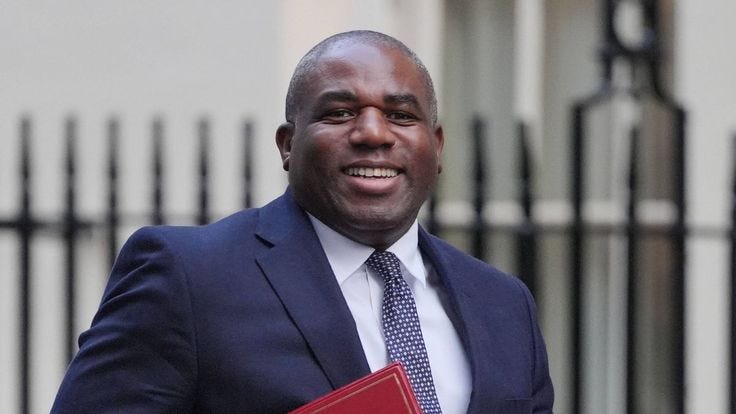
In reality, it is one of the most consequential constitutional rearrangements of the last half-century, delivered in the tone of someone tidying a sock drawer.
This is the moment to start paying attention.
Every democracy has a weak spot. Ours, it turns out, is boredom.
Not the big, cinematic threats, not coups, not mobs, not the great villains of political mythology, but the slow, administrative rearrangements wrapped in beige PowerPoints and sold as “modernisation.” Britain’s constitution, such as it is, dies not with a bang but with a consultation paper.
And this month, in the quiet middle aisle of British politics, David Lammy picked up one of the most delicate pieces of our constitutional machinery, the jury trial, and cheerfully suggested we put it back on the shelf labelled “optional.”
He did this, of course, in the tone of a man rearranging his cutlery drawer: brisk, efficient, untroubled by the weight of the thing he is holding.
**The danger is not that the idea is dramatic.
The danger is that it isn’t.**
If a minister stood up and announced:
“Ladies and gentlemen, we are reducing public participation in the justice system, centralising authority in the hands of state officials, and weakening a centuries-long barrier between government power and the individual,”
you would hear the uproar from John O’Groats to Plymouth.
Even the pigeons in Trafalgar Square would stop mid-flight.
But when the same outcome is delivered in the vocabulary of bureaucracy ‘efficiency; blah blah..backlog reduction blah; capacity management blaaaah’ the public eye slides right past it.
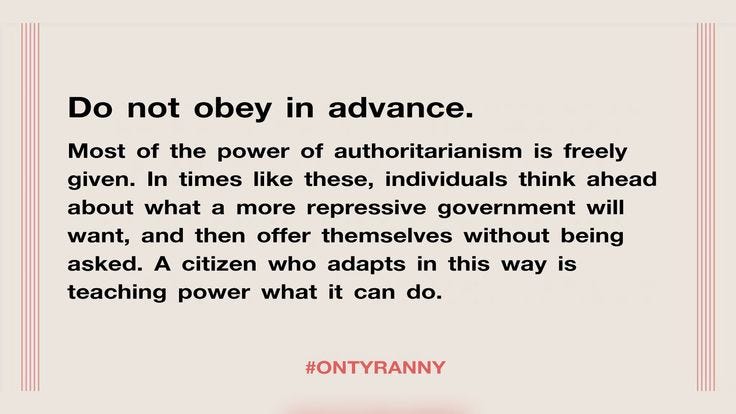
This is how democracies quietly warm themselves to illiberalism: not through manifestos, but through admin.
Ask any historian, from Tacitus to Timothy Snyder:
no reform is more dangerous than the one disguised as a systems upgrade.
Enter: David Lammy, armed with masking tape for a burst pipe
Mr Lammy’s proposal, we are told, is a pragmatic response to the justice system’s well-known ailments. The backlog is enormous; victims are suffering; courtrooms are decaying; barristers are exhausted.
All true.
But the cure he prescribes, replacing many jury trials with judge-led “swift courts”, is not so much treating the disease as drawing a smiley face on the patient and hoping the infection forgets to spread.
It is the political equivalent of applying masking tape to a burst pipe and announcing that the plumbing has been modernised. Or, to borrow from TikTok, it is giving the criminal justice system a “new vibe” rather than fixing the structural rot.
This is not policy.
It is performance art with paperwork.
And worse - it is intellectually unserious.
**What Lammy appears not to understand (or chooses not to mention):
the jury is not a procedural ornament. It is a constitutional instrument.**
The jury trial in England and Wales is not a cute historical relic. It is one of the oldest and most effective checks on the state’s coercive power.
In a country without a written constitution, the jury is the bit of democratic oxygen that enters the courtroom.
You do not have to like juries to respect their purpose.
You only have to understand that the alternative is a justice system run entirely by insiders, adjudicated by the same small circle of professionals who see one another every week and are answerable, effectively, only to themselves.
Even Machiavelli, patron saint of administrative cunning, warned rulers against removing institutions that “animate the people’s confidence.” And he at least had the decency to be explicit about it.
Lammy delivers Machiavelli’s outcome without his intellectual honesty.

History has a particular distaste for those who weaken safeguards in the name of efficiency
Every time a government has tampered with public participation in justice, the justification has been identical: speed, order, efficiency, modernisation.
The Soviet Union, in the 1930s, replaced juries because they were “inefficient and unaligned with state priorities.”
France experimented with “rationalised” justice under Vichy.
Even the Tudors found juries inconvenient obstacles to royal enthusiasm.
I am not comparing Lammy to these regimes, but I am pointing out that the rhetorical playbook is disturbingly consistent.
When a state says, “We must reduce your role in justice because the system is slow,” *clown emoji* the correct response is:
Why not fix the system instead?
Britain’s courts are understaffed, underfunded, technologically archaic, and literally falling apart.
Replacing juries because the Ministry of Justice can’t maintain buildings is like firing the goalkeeper because the stadium roof collapsed.

The common law perspective
- (you do not remove a load-bearing beam because the wallpaper is peeling)
Unlike countries with written constitutions, our safeguards are structural, not textual. The strength of our system lies in the spatial arrangement of power: Parliament, judges, juries, the public.
Each holds the others in check.
Each prevents the state from becoming a closed loop.
Each forces the system to remember that it governs people, not files.
Remove the jury from thousands of cases and you narrow the system’s aperture, increase the concentration of power, and you do so at the very moment the state is most tempted to use that power expediently.
This is not caution. This is carelessness in constitutional clothing.

Dear David,
you cannot call this “modernisation.”
Modernisation would be funding courts, digitising systems, recruiting staff, repairing buildings, and reforming process.
What you are proposing is the quiet erasure of one of the few democratic rituals left in British public life, a ritual that has survived monarchs, empires, wars, recessions and constitutional near-misses because it is, fundamentally, a safeguard for people who have no other safeguard.
And to dress this up as administrative housekeeping is not merely inadequate.
It is reckless.
Democracies rarely crumble through dramatic gestures.
They fade through small, clever, understated adjustments made when the public is tired, distracted, and overwhelmed.
That is why proposals like this matter.
And it is precisely the quiet reforms, the “boring” ones, the ones officials hope you won’t notice, that most deserve scrutiny.
So pay attention.
This is the part of the story where, historically, people regret looking away.
:)