ESSAY
A History We Don’t Want to Remember: The British Education System’s Love Affair with Forgetting Ireland
Why does Britain forget 800 years of oppression in Ireland?
16 February 2025 · 6 min · Kate
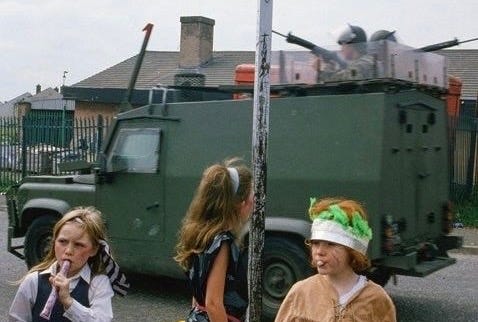
Why does Britain forget 800 years of oppression in Ireland? From selective curriculums to the erasure of figures like Roger Casement, this piece unravels how the British education system quietly whitewashes a complex history, and explores how teaching (or not teaching) certain events shapes national identity, memory, and power.
You’ve probably walked past statues of great British leaders without so much as a second glance.
Winston Churchill? Sure, the man who led Britain to victory in WWII.
Lord Nelson? That fellow who kept the French at bay.
… But can you name a single monument dedicated to Irish rebellion or the long, bloody struggle for independence?
Didn’t think so.
It’s almost as if Ireland doesn’t even feature in the British collective consciousness - despite the fact that Britain and Ireland have been locked in a turbulent, 800-year-long relationship. So, why does the history of Anglo-Irish relations get swept under the rug in British schools?
I’ll tell you: it’s all part of a highly sophisticated campaign of forgetting.
Ah yes, the ‘benefits’ of selective historical amnesia - better known as the art of curriculum curation. I’m not sure if it’s a deliberate conspiracy, but there’s certainly a chilling lack of commitment to teaching about Ireland’s centuries of suffering under British rule.
What is taught about Ireland?
The Irish Famine, perhaps, but framed as a tragic anomaly rather than a direct result of colonial negligence.
The Irish War of Independence? A distant affair, one that barely makes it onto the syllabus.
It’s as if, by failing to teach it, Britain can quietly erase the entire bloody narrative.
Why?
Because acknowledging Ireland’s oppression and Britain’s role in it would require the British public to reckon with their empire in a way they’d rather not.
The British Empire - the thing that helped ‘civilise’ the colonies, but, err, also enslaved millions, plundered nations, and extinguished cultures is still treated like a badge of honor by some, even though it’s a past marred by cruelty, bloodshed, and exploitation.
Selective Amnesia: How Britain Learns to Forget

The key to understanding this curiously curated history is in the curriculum itself. In Britain, there is no mandated, comprehensive study of Anglo-Irish relations. In fact, ‘Conflict with Catholics’ (code for Ireland) is an optional topic.
Optional, can you believe it?
The war that defined a generation of Irish people and contributed to the shaping of modern Britain is still, somehow, relegated to the status of an elective.
Is this a coincidence? Hardly. This is where the concept of Foucault’s second dimension of power comes into play. By shaping the narratives that are taught (or ignored), the British education system exerts a quiet, insidious control over how the nation understands itself. You can teach an entire generation of children about the glories of Empire, but if you never touch on the abuses, the oppression, or the resistance, you create a national memory that is comfortably limited to the heroic bits.
What happens when you fail to teach a whole chapter of history? Well, you can pretend that it never happened. And the sad thing is, the British public generally doesn’t seem to mind. We are trained not to mind.
Roger Casement: A Knight, A Traitor, A Martyr
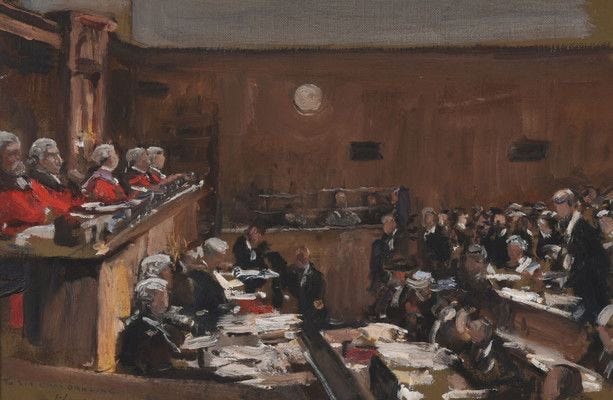
You don’t have to dig too deep to find one of the most telling examples of this historical omission: Roger Casement.
Born into an Anglo-Irish family, knighted for his humanitarian work in the Belgian Congo and the Amazon, Casement was once the epitome of British imperial virtue. He was a man celebrated by the British establishment for his commitment to exposing atrocities around the world.
But, alas, the story doesn’t end there.
In 1916, after years of campaigning for Irish independence, Casement became an Irish nationalist - his former empire now the very enemy he sought to overthrow.
To the Irish, he was a hero, a martyr whose sacrifice laid bare the moral contradictions of British rule.
To the British, he was a traitor, a man who had bitten the hand that had fed him.
Casement was hanged for treason in 1916, but history, at least British history, has been oddly silent about his true significance.
His work in Ireland? Ignored.
His execution? Framed as a necessary act of British justice.
Casements’s imperial service is highlighted, but his allegiance to Ireland is pushed to the margins, as though the British public might be uncomfortable with the full truth.
Why?
Because Casement complicates things.
He’s a reminder that history doesn’t fit neatly into the ‘good guys vs bad guys’ narrative.
He’s a reminder that the British Empire - like all empires - was built on injustice, and that the Irish fought long and hard to free themselves from it.
Empire, Education, and the Forgotten Struggles
What we’re seeing here is less of a conscious conspiracy and more of a cultural habit: the habit of forgetting uncomfortable truths.
It’s not just Ireland, either. Look at the history of slavery in Britain: how long was it sidelined, sanitised, or outright ignored? How much longer did it take for British schoolchildren to learn about the crimes of Empire, as they gobbled up patriotic stories about civilising missions and the glory of the British Empire?
In a similar way, Ireland has been relegated to the status of an inconvenient fact - so inconvenient that it is often absent from textbooks entirely.
Ireland’s struggle for independence doesn’t neatly fit into the British myth of a benevolent Empire, so we choose not to remember it. Britain’s education system becomes a tool for reinforcing the image of an Empire that, in hindsight, was kinder and more just than it really was. By keeping Ireland out of the classroom, the trauma of colonial rule can be neatly tucked away, leaving only the myth of British superiority.
What Are We Teaching? The Dangerous Politics of Curriculum Control
The role of education in shaping national identity is no accident. By deciding what is and isn’t taught, the curriculum sets the boundaries of what we remember and how we remember it.
And in the case of Anglo-Irish relations, it’s clear: Britain is teaching its children a convenient version of history, one that avoids the messier, more uncomfortable aspects of its imperial past.
This is exactly why the curriculum must change. Ireland’s history with Britain is not just an Irish story, it’s a British one, too. It’s a story that runs deep in the veins of British society, a reminder of the unfinished business of Empire. If British students are ever to truly understand their nation’s past, they must be taught the full truth.
It’s time to stop teaching history as a tale of empire-building heroes. It’s time to teach the struggles of the oppressed and the rebels who fought for their freedom.
If Britain is truly to come to terms with its past, it must start by teaching a more honest, inclusive history. One that doesn’t sweep Ireland under the carpet. One that acknowledges the complexity, the violence, and the painful legacy of the British Empire.
Until then, Britain will continue to wander, in a very real sense, like a country that has forgotten its own story.
Thank you for reading!! Don’t forget to join the conversation by leaving a comment ❤️